Call Us: +86-18792701548Email: janet@efinecom.com
enLanguage

Horn Antenna

What is Horn Antenna


Horn antenna is a type of antenna that is used for a wide range of applications, including radar, communications, and radio astronomy. It is characterized by its flared shape, which gradually widens from a narrow feed aperture to a larger aperture. This unique shape allows the horn antenna to efficiently transmit and receive electromagnetic radiation over a broad frequency range. These antennas are commonly used in high-power, high-frequency systems, and are often seen in research labs and military applications.


Advantages of Horn Antenna
 

High gain
Horn antennas exhibit high gain, which is the ability to concentrate radiation in a particular direction. This makes them ideal for transmitting and receiving signals over long distances.


Low noise
Horn antennas generate low noise, which means that they produce less background noise when amplifying weak signals. This makes them ideal for use in sensitive applications like radio astronomy.


Easy to design and manufacture
The design and manufacturing of horn antennas are relatively simple, making them practical for mass production. They are also made from low-cost materials, making them economical.


High power handling capacity
Horn antennas can handle high power levels without experiencing damage, which makes them suitable for use in high-power applications like microwave ovens and radar systems.

First 12 Last 1/2

Why Choose Us


Our Products

Focusing on the development, production and sales of industrial conductive slip rings, sensors.We are struggling to serve our clients with high quality and innovative products.

Global Shipping

Our products are not only sold as the best seller and high-reputation products in the domestic market, but also are exported to the world, such as America, UK, Germany, Russia, South-Korea, and Vietnam with OEM and ODM service, andwhich has won the extremely high praise and trust from the old and potential clients.

Custom Service

We anticipate intensive cooperation with your company and offer professional products, active and efficient support, and worry-free after-sales service.

Our Team

We are struggling to serve our clients with high quality and innovative products. Oursenior engineers, with more than 20 years experience on the industry technology, devote themselves to the strict QC and the thoughtful services.


Types of Horn Antenna
 

Pyramidal horn antenna

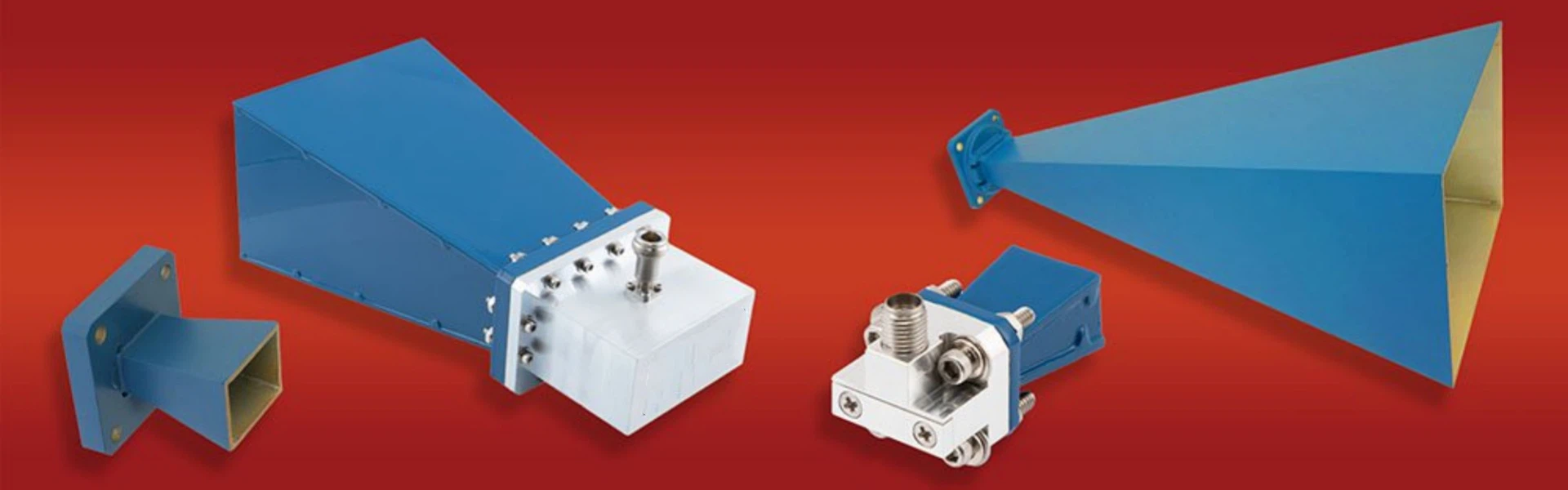
Pyramidal horn antenna is a type of directional antenna typically used in microwave communication systems. It is named after its shape, which is similar to that of a pyramid. The antenna usually consists of a rectangular or square waveguide that transitions to a flared horn shape. The flared shape helps to efficiently couple electromagnetic waves between the waveguide and free space. A pyramidal horn antenna is often used for point-to-point communication, radar systems, and satellite communication systems because of its high gain, narrow beamwidth, and low sidelobes.


Conical horn antenna

Conical horn antenna is a type of antenna that is commonly used for microwave communication. It is made of a circular or square waveguide that widens gradually to form a conical shape. This shape allows for the antenna to have a wide bandwidth with high gain and low sidelobes. It is commonly used in satellite communication, radar systems, and radio telescopes. The conical horn antenna has become a popular choice for many applications due to its unique properties and ability to efficiently transmit and receive electromagnetic waves.


Exponential horn antenna

Exponential horn antenna is a type of directional antenna that is used for high gain and frequency bandwidth applications. It is designed with a smoothly flared horn-shaped structure that exponentially increases in size from the input to the output end. This allows for efficient transfer of electromagnetic energy from the source to the space, resulting in a highly directional and focused radiation pattern. Exponential horn antennas are commonly used in microwave communication systems, radar applications, and satellite communications.An exponential horn antenna is a type of directional antenna that provides a wider bandwidth than a conventional horn antenna. It is often used in microwave and RF applications.


Sectoral horn antenna

Sectoral horn antenna is a type of directional antenna that is commonly used in wireless communication systems. It is designed to focus its radiated energy in a specific direction, typically in a wide sector, while also suppressing interference and reflections from other directions. Sectoral horn antennas are often used in point-to-multipoint applications, such as in cellular base stations, wireless access points, and other similar applications. They are known for their high gain, low noise, and ability to cover large areas with minimal interference.


Dual-mode horn antenna

Dual-mode horn antenna is a type of antenna that is capable of operating in two distinct modes, namely the standard mode and the high-mode. The standard mode is used for wide-angle coverage while the high-mode is ideal for providing high directivity. This antenna is designed to provide a high level of gain and a low level of side lobes, making it ideal for use in communication systems that require high levels of accuracy and precision. It is commonly utilized in microwave ranges and other applications that require a high level of signal strength and directional sensitivity.


Loop Antenna

Loop antenna is a type of radio antenna that consists of a closed loop of wire that forms a coil. The coil can be either a single turn or a multi-turn loop, and it is usually designed to resonate at a specific frequency or range of frequencies. Loop antennas are commonly used for receiving signals in the medium and lower frequency ranges, where their small size and low noise make them highly efficient and effective. They can also be used for transmitting, although their power handling capabilities are limited. Loop antennas are often used in portable radios, car radios, and other applications where space is limited or where high efficiency is required.


Working Principle of Horn AntennasDescription


Horn antennas are widely used in microwave communication systems due to their high efficiency and excellent radiation characteristics. They are essentially a waveguide structure with a flared shape that causes the electric and magnetic fields to propagate away from the source, resulting in a directional radiation pattern.


The working principle of a horn antenna is based on the waveguide theory, which states that the electric and magnetic fields traveling inside a waveguide are orthogonal to each other and propagate along the length of the waveguide in a standing wave pattern. As the waveguide opens up into a flared horn, the electric and magnetic fields spread out and radiate into free space.


When an electromagnetic signal is applied to the horn antenna, the signal is transmitted through the waveguide and into the horn aperture. The flared shape of the horn causes the electromagnetic waves to expand and radiate outwards. As the waves spread out, they form a beam which has a narrow radiation pattern.


The radiation pattern of a horn antenna is determined by the geometry of the horn aperture and the wavelength of the transmitted signal. A smaller aperture will produce a tighter beam, while a larger aperture will produce a wider beam. The angle of the flared sides also plays a role in determining the radiation pattern, with a more gradual flare producing a wider beam, and a steeper flare producing a more focused beam.


Applications of Horn Antennas
 
01/

Radio telescopes
Horn antennas are commonly used in radio telescopes to receive weak signals from distant sources. The directional characteristics of horn antennas allow for precise point-source imaging, making them ideal for astronomical observations.

02/

Radar systems
Horn antennas are frequently used in radar systems for their high gain and directional capabilities. They are used for both transmitting and receiving microwave signals, and their low sidelobe levels help reduce interference and improve signal quality.

03/

Wireless communications
Horn antennas are often used for point-to-point wireless communications, such as in microwave links for cellular networks. The high gain and directional characteristics of horn antennas allow for long-range, reliable communication links.

04/

Satellite communications
Horn antennas are commonly used in satellite communications systems, both for transmitting and receiving signals. The directional characteristics of horn antennas allow for precise targeting of signals to specific regions of the Earth.

05/

EMC testing
Horn antennas are also frequently used in electromagnetic compatibility (EMC) testing, where they are used to generate and measure electromagnetic fields for compliance testing of electronic devices and equipment.

06/

Industrial sensing
Horn antennas can also be used for industrial sensing applications, such as in the measurement of moisture content in materials or the detection of flaws in metal objects.


How to Choose a Horn Antenna


1.Beamwidth and gain
These terms refer to the ability of the antenna to focus the signal in a specific direction. A narrower beamwidth will provide more precise targeting, while a higher gain will allow for longer range. However, higher gain often comes at the cost of a wider beamwidth.

2.Environmental conditions
Antennas can be affected by factors such as temperature, moisture, and electromagnetic interference. Be sure to choose an antenna that is suitable for your environment.

 
03
 

Frequency range

Horn antennas are designed to operate within a specific frequency range. Be sure to choose an antenna that is appropriate for the frequency of your signal.

 
04
 

Polarization

Horn antennas can be either linearly or circularly polarized. Make sure you select an antenna with the polarization that matches your system.

 
05
 

Size and weight

Consider the space you have available for mounting the antenna, as well as any weight restrictions.

Biconical Antenna


Biconical Antenna


What Is the Efficiency of Horn Antenna

The efficiency of a horn antenna refers to the ratio of the power radiated by the antenna to the total power input to the antenna. The higher the efficiency, the more power is radiated and less is lost as heat in the antenna structure.

In general, horn antennas have high efficiency compared to other types of antennas such as dipole antennas or patch antennas. This is because horn antennas are designed to minimize losses due to reflection and impedance mismatch, and to maximize the coupling of energy from the transmitter to the antenna.

The efficiency of a horn antenna depends on various factors such as its frequency range, size, shape, and the material used in its construction. For example, a pyramidal horn antenna typically has an efficiency of 70-80%, while a conical horn antenna can have an efficiency of up to 90%.

To improve the efficiency of a horn antenna, various techniques such as using high-quality materials, optimizing the antenna dimensions and shape, and minimizing losses due to feedline and connector can be employed.


Components of Horn Antenna


Waveguide: The waveguide of a horn antenna is a metal tube that carries the electromagnetic waves from the transmitter to the antenna or from the antenna to the receiver. The waveguide is usually rectangular in shape and is made of copper, aluminum or brass.

Horn: The horn is the flared end of the waveguide. It is a conical structure that expands from the narrow end of the waveguide to the wider end. The function of the horn is to radiate or receive electromagnetic waves efficiently.

Feed: The feed is the element of the antenna that is used to couple the electromagnetic waves from the waveguide into the horn. The feed can be a dipole antenna, a probe, or a loop antenna.

Flange: The flange is the metal plate that is used to connect the horn to other components of the antenna system. It is usually made of brass or aluminum and is attached to the waveguide using screws or bolts.

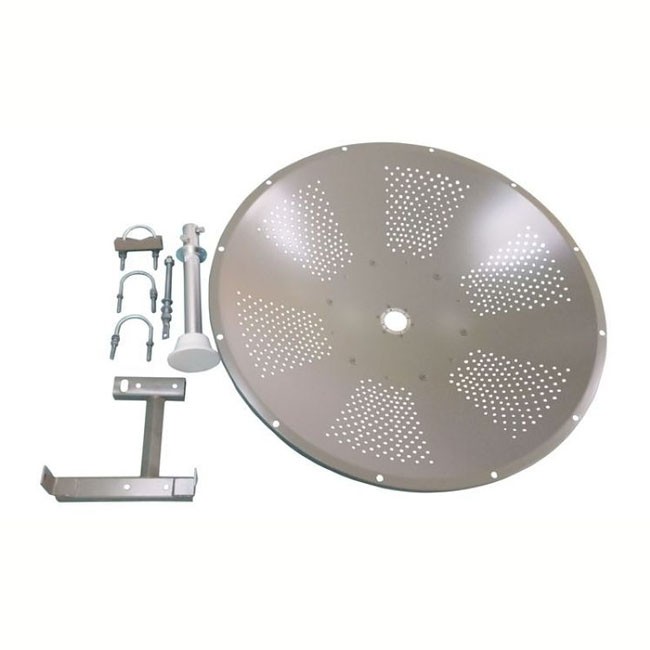
Reflector: The reflector is the metal plate that is placed behind the horn to reflect the electromagnetic waves in a particular direction. The reflector improves the directionality and the gain of the antenna.


How Do I Increase the Gain of My Horn Antenna

Increase the size of the horn: The larger the horn, the greater the gain. However, a larger horn may also increase the size and weight of the antenna.

Change the horn design: The shape and geometry of the horn can affect the gain of the antenna. You can try different shapes, such as pyramidal or conical horns, to see if they provide more gain.

Use a higher frequency: The gain of a horn antenna is proportional to the frequency of the signal it is designed to receive. By increasing the frequency, you may be able to achieve higher gain.

Add a reflector: A reflector behind the horn can increase the gain of the antenna by reflecting the signal towards the horn.

Use a horn array: Combining multiple horn antennas can create a horn array, which can increase the gain of the antenna system.

Parabolic Dish Antenna


Waveguide Double Channel Rotary Joint
 
Precautions When Using Horn Antenna
 

Safety

Horn antennas can generate high levels of electromagnetic radiation, which can be hazardous to human health. Therefore, it is important to follow all safety guidelines when working with the antenna. This includes wearing appropriate protective gear, such as gloves, goggles, and a protective suit, as well as ensuring that the antenna is installed in a safe location away from people and other equipment.

Calibration

Horn antennas need to be properly calibrated to ensure accurate and reliable results. This involves setting the antenna to the correct frequency, adjusting the polarization, and ensuring that the beamwidth is properly aligned.

Compatibility

Horn antennas are designed to work with specific frequency ranges, so it is important to ensure that the antenna is compatible with the frequency range of the equipment being used.

Placement

Horn antennas are directional, which means that they need to be properly aimed at the target area in order to achieve the desired results. This requires careful placement and alignment of the antenna, which may require specialized equipment or tools.

Maintenance

Horn antennas need regular cleaning and maintenance to ensure that they are functioning properly. This includes cleaning the antenna itself, as well as checking connections, inspecting the cables, and ensuring that the power source is working correctly.


How to Maintain Horn Antenna


Keep the horn antenna clean
Regularly clean the antenna with a soft cloth to remove dust, dirt, and debris. A clean antenna surface ensures maximum energy transfer and reduces signal loss.


Check for any physical damage
Scratches, dents, or cracks can disrupt the antenna's performance. Check for any physical damage and repair it immediately.


Inspect cables and connectors
Check cables and connectors for any signs of wear and tear, including cracks, corrosion, or frayed ends. Replace damaged cables and connectors with high-quality ones.


Check the mounting structure
Check the mounting structure for any signs of rust, corrosion, or other damage. Repair or replace the mounting structure as needed to ensure the antenna remains stable and secure.


Perform regular field strength measurements
Regularly measure the antenna's field strength to check for any performance degradation or signals that may indicate a problem.


FAQ
 

Q: What is the use of horn antenna?

A: They are used as feed antennas (called feed horns) for larger antenna structures such as parabolic antennas, as standard calibration antennas to measure the gain of other antennas, and as directive antennas for such devices as radar guns, automatic door openers, and microwave radiometers.

Q: What does the horn reflector antenna do?

A: Horn antenna is sometimes also called microwave horn used to collect and transmit the radio wave in space. It is a horn shaped waveguide to collect radio waves and to make them propagating like beam. Horn antenna can be used for large bandwidth .

Q: How do I increase the gain of my horn antenna?

A: There are several ways to increase the gain of a horn antenna. One way is to increase the size of the antenna by making the horn longer or wider. Another way is to use a larger feed horn or reflector to focus the signal. A third way is to use materials with higher conductivity or lower losses, such as copper or silver, to reduce signal loss. Finally, adjusting the position and orientation of the antenna can also help increase gain by maximizing the signal strength in a particular direction.

Q: What is the difference between horn antenna and dipole antenna?

A: The dipole is any one of a class of antennas producing a radiation pattern approximating that of an elementary electric dipole with a radiating structure supporting a line current so energized that the current has only one node at each end. A horn antenna is used for full Earth coverage from a geostationary satellite.

Q: What is the power of horn antenna?

A: The power of a horn antenna refers to its ability to radiate electromagnetic waves and receive signals. The power is directly related to the antenna's gain, which is a measure of its ability to focus and concentrate energy in a specific direction. Horn antennas are known for their high gain and high power handling capabilities, making them ideal for applications that require long-range communication, radar, and satellite communication. The power of a horn antenna can be further enhanced by increasing its size, frequency, and shape to optimize its performance for different applications.

Q: How many types of horn antennas are there?

A: It is of two types: Sectoral H-plane horn – if flaring is along direction of magnetic field H. Sectoral E-plane horn – if flaring is along the direction of electric field E.

Q: What frequencies can a horn antenna operate at?

A: The operational frequency range of a horn antenna is around 300MHz to 30GHz. This antenna works in UHF and SHF frequency ranges.

Q: Why lens antennas are widely used with horn antennas?

A: Lens Horn Antennas are especially useful when high gain is required with the minimum size. Therefore, these antennas are widely used in radar applications, communication and meteorological systems among others.

Q: What are the advantages of a corrugated horn over a horn antenna?

A: The main advantage of a corrugated horn is its capability to radiate a field with very low cross polarisation. This means, in other words, that the field lines in the horn aperture are almost parallel.

Q: What is the efficiency of horn antenna?

A: The horn length has been optimized to obtain maximum efficiency for a fixed aperture. Simulation results show that as the frequency increases from 700 to 1130 MHz, the gain monotonically increases from 8.4 to 12.6 dBi with maximum efficiency of 80% at 850 MHz and it varies between 72% and 80% over this band.

Q: How do you feed a horn antenna?

A: Feed the horn antenna with a physical feed pin and voltage source. Feed the horn antenna with a waveguide port and waveguide source. Feed the horn antenna with a near field source.

Q: What is the maximum gain of horn antenna?

A: Horn antennas often have a directional radiation pattern with a high antenna gain, which can range up to 25 dB in some cases, with 10-20 dB being typical.

Q: How do I increase bandwidth on my horn antenna?

A: In order to increase the bandwidth of the horn antenna and reduce the main mode cutoff frequency and its impedance characteristics, the ridge is usually used to improve the transmission characteristics of the horn antenna.

Q: Which type of antenna is better?

A: There are two main types of roof antennas - directional (Yagi) antennas and omnidirectional (collinear) antennas. Directional, or Yagi antennas, are the most popular choice of antenna, as their high power provides the strongest increase of all antenna types.

Q: What is the polarization of horn antenna?

A: There are four lobes in the cross-polarization pattern of linear polarized horn. And the phase of cross-polarization is changed at each bound of the quadrants. That of co-polarization, meanwhile, keeps almost the same value. There is a notch in the center of circular polarized horn cross polarization pattern.

Q: Is horn antenna directional?

A: Horn is directional and has gain. The microwave energy is fed to the horn by a transmission line. Coax can be used for the lower microwave frequencies, but at the higher microwave frequencies, coaxial cable loss is too high for long runs.

Q: What is a standard gain horn antenna?

A: Referred to as microwave horn antennas or simply gain horn antennas, are broadband passive devices shaped like a pyramidal horn design to direct a beam radio waves at a precise frequency.

Q: What are the parts of horn antenna?

A: In essence, horn antennas are rectangular or circular waveguides with a smaller waveguide or coaxial port on one end. Low voltage standing wave ratio (VSWR) horn antennas operate across a very wide bandwidth (10:1 and even 20:1 horn antennas are feasible), have a modest directivity, and are reasonably easy to make.

Q: What is rectangular horn antenna?

A: A very common antenna for microwave and millimeter-wave systems are horn antennas. Horn antennas are essentially rectangular or circular waveguides that reduce the size of a waveguide or coaxial port at one end.

Q: What is the conclusion of horn antenna?

A: The voltage developed at the receiver due to the cross-polarized component of incident field on the aperture of the pyramidal horn is found to be low and the resulting AF is high. Further the horn antenna has wide bandwidth and is therefore suitable as efficient EMFS.


We're professional horn antenna manufacturers and suppliers in China, specialized in providing high quality customized products. We warmly welcome you to buy high-grade horn antenna for sale here from our factory. For price consultation, contact us.

satellite dish feed horn, waveguide horn antenna, conical horn

(0/10)

clearall