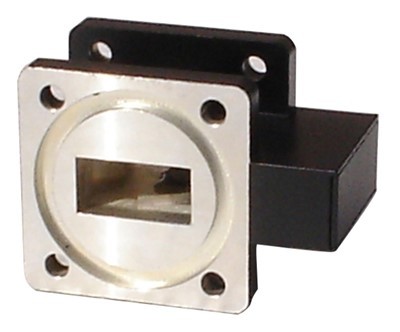
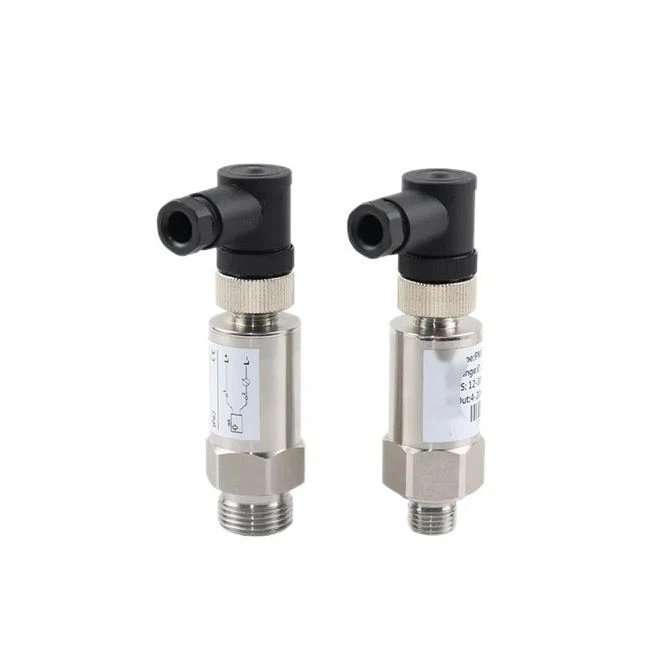
Q: What are the different types of RF components?
A: There are various types of RF components used in electronic circuits. These include amplifiers, attenuators, filters, mixers, oscillators, and RF switches. Amplifiers are used to increase the strength of an RF signal, while attenuators decrease the signal strength. Filters are used to select or reject specific frequencies in an RF signal. Mixers are used to combine two or more RF signals, whereas oscillators generate an RF signal at a specific frequency.
Q: How does the performance of an RF circuit depend on the quality of its components?
A: The performance of an RF circuit heavily depends on the quality of its components. If the components are of low quality, they may introduce unwanted noise, distortion, and other unwanted characteristics to the signal. This can result in poor signal quality, reduced power efficiency, and overall degraded performance of the circuit.
Q: What is the role of a resistor in an RF circuit?
A: The role of a resistor in an RF circuit is to limit the current flowing through the circuit and to decrease the power of the signal. This is important in order to prevent damage to sensitive components and to ensure that signals are not distorted or overdriven.
Q: What are the different types of resistors used in RF circuits?
A: The choice of resistor depends on the specific application and the desired resistance value, power rating, and frequency response. Carbon composition resistors are commonly used in low-frequency applications, while thin-film and thick-film resistors are suitable for higher-frequency circuits. Metal-film resistors offer high precision and low noise, while wirewound resistors are used in high-power applications.
Q: What is the role of a capacitor in an RF circuit?
A: Capacitor in an RF circuit plays a critical role in blocking DC voltage while allowing AC signals to pass through. It can also be used to store and discharge electrical energy, which can help improve the efficiency of the circuit.
Q: What are the different types of capacitors used in RF circuits?
A: There are several types of capacitors commonly used in RF circuits, including ceramic, film, tantalum, and electrolytic capacitors. Ceramic capacitors are small, inexpensive, and offer stable performance over a wide range of frequencies, making them ideal for use in RF circuits.
Q: What is the role of an inductor in an RF circuit?
A: An inductor, also known as a coil, is an important component in RF circuits because it is used to store energy in a magnetic field. Inductors are used in RF circuits to filter out unwanted frequencies by selectively allowing certain frequencies to pass through while blocking others. They can also be used to tune circuits to specific frequencies or to match impedances between different components in the circuit.
A: RF choke, also known as a radio frequency choke or inductor, is a type of passive electrical component that is used to reduce and block high-frequency electrical signals while allowing low-frequency signals to pass through. It is essentially a coil of wire that creates a magnetic field when current flows through it, which in turn resists or blocks the flow of high-frequency currents. RF chokes are commonly used in electronic circuits to suppress electromagnetic interference (EMI), reduce noise, and improve the overall performance of radio transmission and reception systems.
Q: What is the difference between RF and microwave components?
A: RF components refer to devices that operate in the frequency range of a few kilohertz to several gigahertz, while microwave components operate in the frequency range of several gigahertz to several tens of gigahertz. Both types of components are used in wireless communication systems, radar systems, and other applications.
Q: What are some common types of RF components?
A: Some common types of RF components include antennas, amplifiers, attenuators, filters, mixers, oscillators, and couplers. Antennas are devices used for transmitting and receiving RF signals. Amplifiers increase the power of the input signal. Attenuators decrease the power of the input signal. Filters allow desired frequencies to pass through while blocking unwanted frequencies. Mixers combine two or more input signals to create an output signal. Oscillators generate signals at specific frequencies. Couplers split a signal into two or more paths.
Q: How do RF components function in electronic circuits?
A: RF components, such as oscillators, filters, amplifiers, and antennas, function to manipulate and process radio frequency signals in electronic circuits. Oscillators generate a precise frequency signal, which can be used as a timing reference or to transmit information in communication systems. Filters are used to reject unwanted frequencies and enhance signal purity. Amplifiers increase the power of an RF signal, making it more usable for communication or other applications. Antennas are used to transmit and receive RF signals, transforming electrical signals into electromagnetic waves that can be transmitted through space.
Q: What is the purpose of an RF amplifier?
A: The purpose of an RF amplifier is to amplify an RF signal to a higher power level, typically for transmission or further processing. This is necessary to boost the signal above the noise floor and ensure it can be properly received or detected at a receiving end. RF amplifiers are commonly used in a variety of applications including radio and television broadcasting, cell phone networks, wireless communication systems, and radar systems.
Q: What is the purpose of an RF attenuator?
A: RF attenuator is used to reduce the power of an RF signal in a controlled and precise manner. It is often used in test and measurement systems, as well as in communication and broadcasting applications, where it can help to ensure signal integrity and prevent damage to sensitive equipment. Attenuators are available in a range of designs and configurations, and can be used to adjust both the amplitude and phase of an RF signal.
A: RF filter is an electronic device that allows certain frequencies to pass through while blocking or attenuating unwanted frequencies. It is commonly used in radio frequency (RF) communication systems to prevent interference and improve signal quality. RF filters can be designed with various types of filter circuits, such as low-pass, high-pass, band-pass, and band-stop, depending on the specific frequency range and application requirements. They are commonly used in wireless communication, radar systems, satellite communication, and other RF applications.
Q: How do RF filters work?
A: RF filters work by selectively attenuating or blocking certain frequencies in a signal while allowing others to pass through. This is achieved by using a combination of reactive components, such as capacitors and inductors, to form a circuit that resonates at specific frequencies. When the input signal passes through the filter, the reactive components either reflect or absorb the unwanted signals, producing a cleaner and more stable output signal with less interference.
Q: What is the purpose of an RF splitter/combiner?
A: The purpose of an RF splitter/combiner is to divide an RF signal into two or more branches or to combine multiple RF signals into one. These branches can be distributed to multiple devices such as antennas or amplifiers, or the combined signal can be fed into a single device, such as a receiver or transceiver. RF splitters/combiners are commonly used in telecommunications, broadcasting, and wireless communication systems.
Q: How do RF switches work?
A: RF switches work by selectively controlling the direction of electromagnetic signals through a circuit. They typically consist of two or more ports that can be connected or disconnected to route signals in different ways. The switching process can be done electronically using transistors or other semiconductor components, or mechanically using micro-electromechanical systems (MEMS). RF switches are used in a wide variety of applications, including telecommunications, aerospace, military, and consumer electronics.
Q: What is an RF coupler?
A: RF coupler is an electronic device that is used to split or combine radio frequency (RF) signals. It is typically a passive component that does not require any power to operate. RF couplers can be used for various applications, such as distributing a single RF signal to multiple devices, combining multiple RF signals into a single output, or measuring the power of an RF signal. They can come in different types, such as directional couplers or hybrid couplers, depending on their specific function and design.
Q: What is an RF modulator?
A: RF modulator is a device that converts audio and video signals into a format that can be transmitted through an RF cable or antenna. It is commonly used in older televisions that lack composite or HDMI inputs and can only receive signals through a coaxial input. The RF modulator takes the composite video and audio signals and modulates them onto an RF signal that can be transmitted through the antenna input.
Q: What are some common applications for RF components?
A: RF components or radio frequency components are used in a variety of applications such as mobile phones, satellite communications, radar systems, wireless networking, and broadcasting. They are used to transmit and receive signals wirelessly and are therefore important in the field of wireless technology. RF components include antennas, filters, amplifiers, couplers, oscillators, and mixers, among others.