Call Us: +86-18792701548Email: janet@efinecom.com
enLanguage

Slip Ring

What is Slip Ring


Slip ring also known as a rotary electrical interface or electrical rotary joint, is a device used to transmit electrical power and signals from a stationary structure to a rotating component. The slip ring consists of two main components stationary brushes and a rotating collar or ring. The brushes are made of conducting material, such as copper, while the ring is usually made of steel or brass. The brushes make contact with the ring, allowing the transfer of electrical energy and signals.Slip rings come in a variety of sizes and designs, depending on the specific requirements of the application. They are commonly used in electronics, robotics, wind turbines, and in any machines that require continuous rotation while maintaining power transmission and signal communication. The advantages of using slip rings include reduced wire fatigue and less maintenance, as compared to other methods of transmitting electrical power and signals across rotating platforms.


Advantages of Slip Ring
 

Transmitting power and signals
Slip rings allow uninterrupted transmission of power and signals to rotating devices. They enable the transfer of electrical power from the stationary device to the rotating equipment, making it possible for the latter to run efficiently.


Low electrical noise
Slip rings provide low electrical noise, which is crucial for applications where noise interference can disrupt the system's accuracy and efficiency.


Reliable operation
Slip rings are designed to operate reliably, even in harsh environments. Their rugged design ensures that they can withstand extreme temperatures, shock, and vibration, which are often encountered in industrial applications.


No requirement for slip ring maintenance
Slip rings require minimal maintenance compared to other power transmission solutions. This is because they have low friction and wear rates, and the materials used are resistant to corrosion.

First 12345 Last 1/5

Why Choose Us


Our Products

Focusing on the development, production and sales of industrial conductive slip rings, sensors.We are struggling to serve our clients with high quality and innovative products.

Global Shipping

Our products are not only sold as the best seller and high-reputation products in the domestic market, but also are exported to the world, such as America, UK, Germany, Russia, South-Korea, and Vietnam with OEM and ODM service, andwhich has won the extremely high praise and trust from the old and potential clients.

Custom Service

We anticipate intensive cooperation with your company and offer professional products, active and efficient support, and worry-free after-sales service.

Our Team

We are struggling to serve our clients with high quality and innovative products. Oursenior engineers, with more than 20 years experience on the industry technology, devote themselves to the strict QC and the thoughtful services.


Types of Slip Ring
 
01/

Wireless slip rings
These wireless slip rings are unaffected by carbon contact brushes and friction-based metals in slip rings. Instead, they use the electromagnetic field produced by the coils in the spinning receiver and stationary transmitter to communicate data and energy wirelessly. These wireless slip rings are a fantastic alternative to traditional slip rings.

02/

Pancake slip rings
The conductors are placed on a flat disc resembling concentric rings on the spinning shaft in a pancake slip ring. This arrangement has higher volume and weight for the same electrical circuits, more crosstalk and capacitance, more brush wear, and easily gather wear debris on its vertical axis.

03/

Ethernet slip rings
This slip ring type transfers the Ethernet protocol through a rotating system. When selecting three extremely important parameters for an ethernet slip ring for communication, three extremely important parameters are considered. Return Loss, Insertion Loss, and Crosstalk are examples of these. Ethernet slip rings to aid in reducing losses, impedance balance, and crosstalk management.

04/

Mercury wetted slip rings
The sliding brush interface is replaced by a pool of liquid metal molecularly bound to the contacts in mercury-wetted slip rings, known for their low resistance and stable connection. The liquid metal maintains the electrical connection between the stationary and rotating contacts during rotation.

05/

Fibre optic slip rings
These kinds of slip rings send and receive enormous volumes of data and signals via revolving interfaces. Fibre Optic Joint or Fiber-Electric Rotary Joint is another name for a fibre optic slip ring. HD video transmission systems, radar, video monitoring systems, medical equipment, and other devices use this sort of slip ring.

06/

Capsule and through-hole slip rings
It has a diameter of dimensions 12 to 45mm, and there are 3 to 56 circuits, Capsule Slip Rings are tiny, non-through-hole structures. The special gold-gold technology used on the rings and brushes allows for the transmission with high-frequency signals, and Fieldbus transfers to 1G of bandwidth.


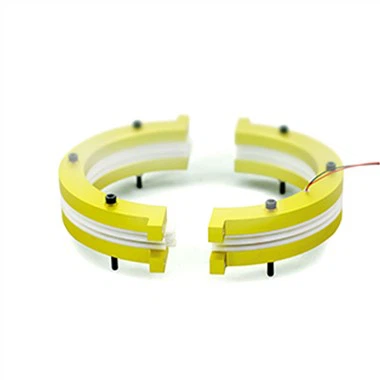
Low Torque Rotary Joints

Material of Slip Ring


Metal slip rings are commonly made of materials such as copper, brass, and aluminum. These materials are typically chosen for their excellent electrical conductivity, corrosion resistance, and ability to withstand high temperatures and mechanical stress. Plastic slip rings are also widely used and are typically made of materials such as polypropylene, polycarbonate, and nylon. These materials offer good insulation properties, are lightweight, and can be molded into complex shapes, making them useful for a wide range of applications. Composite slip rings are made of a combination of materials, such as carbon fiber and fiberglass, which offer a high strength-to-weight ratio, excellent electrical conductivity, and resistance to wear and tear.

Composition of Slip Ring


Slip ring, also known as a rotary electrical interface, is a device used in electromechanical systems to allow the transfer of power and signals between stationary and rotating parts. It consists of a stationary component, called a stator, and a rotating component, called a rotor. The stator typically consists of a set of brushes or contacts that are fixed in a housing, which is connected to the stationary part of the system. The rotor is usually mounted on a shaft and rotates within the housing of the stator. A set of electrical conductors, known as slip rings, are typically located on the rotor.
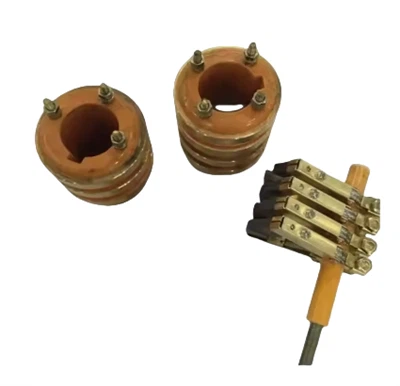
The slip rings are circular conductive rings that are connected to the rotor and provide the interface for the electrical connection between the rotating and stationary parts. Depending on the application, different numbers of rings may be used to transfer different signals and power. Generally, each individual signal or power transfer requires a separate set of conductive rings or tracks.In addition to the slip rings, brushes or contacts are used to make contact with the slip rings. These brushes or contacts are often made of graphite or a similar material to ensure proper conductivity and minimize the friction and wear during rotation.

Central Rotary Joint


Common Uses For Slip Ring


Wind turbines

Slip rings are used in wind turbines to transfer power from the rotating blades to the stationary generator.

Robotics

Slip rings are used in robotic arms to transfer power and control signals between the rotating arm and its stationary base.

Medical equipment

Slip rings are used in various medical equipment, such as MRI machines, to allow for the rotation of the equipment without disrupting the electrical signals.

Surveillance systems

Slip rings are used in pan/tilt cameras for security and surveillance systems to transmit power and control signals to the rotating camera.

Packaging machinery

Slip rings are used in packaging machinery to transfer power and control signals to the rotating parts of the equipment.

Broadcast equipment

Slip rings are used in television cameras to enable the transmission of power and control signals to the rotating camera.

Semiconductor equipment

Slip rings are used in semiconductor equipment, such as wafer handlers and etching machines, to transfer power and control signals to the moving components.

Amusement park rides

Slip rings are used in amusement park rides, such as ferris wheels and carousels, to transfer power and control signals to the rotating components.

Lighting systems

Slip rings are used in large theatrical lighting systems to enable the rotation of the lights without interrupting the electrical signals.


Electrical Requirements for Slip Ring


Slip rings are an essential component in electrical machinery that require the transmission of power, electrical signals, or data signals in a rotating system. These requirements depend on the specific application and can include voltage, current, frequency, insulation resistance, and temperature.

Voltage: The voltage rating of a slip ring refers to the maximum voltage that it can handle without breakdown or insulation failure. It is essential to ensure that the voltage rating of the slip ring matches or exceeds the voltage of the system it is being used in.

Current: The current rating of a slip ring refers to the maximum amount of current that it can pass through without overheating or damage. The current capacity of a slip ring is determined by the size of its conductive components and the quality of its contact materials.

Frequency: Slip rings can be designed to operate over a wide range of frequencies, from DC to high-speed signals in the GHz range. The frequency range of a slip ring is often determined by the type of signal it is carrying, such as power or data.

Insulation resistance: Insulation resistance is the ability of a slip ring to provide electrical isolation between conductive elements. It is a critical parameter as it ensures the safety of the system and minimizes the risk of electrical failures. The insulation resistance of a slip ring is usually measured in megaohms and is affected by factors such as temperature, humidity, and contamination.

Temperature: Slip rings can be designed to operate at various temperatures, from sub-zero to high-temperature environments. The temperature rating of a slip ring is determined by its construction materials and insulation properties. It is important to select a slip ring that can operate within the temperature range of the application.


Low Torque Rotary Joints

How Do You Mount a Slip Ring

Prepare the slip ring
Check the slip ring's mounting surface for any debris or defects that could affect its performance. Wipe the surface clean and inspect the slip ring's wiring and connectors to make sure they are undamaged.

Select a suitable mounting location
Choose a location that is easily accessible and provides enough space to accommodate the slip ring. Check that the surface is flat and level, and that there are no obstructions that can interfere with the slip ring's rotation.

Mark the mounting holes
Place the slip ring on the mounting surface and use a pencil or marker to mark the locations of the mounting holes. Carefully measure and mark the holes to ensure accuracy.

Drill the mounting holes

Use a drill to create the mounting holes. Make sure the holes are the correct size for the screws or bolts you plan to use. It's important to drill the holes straight and perpendicular to the mounting surface to ensure a secure fit.

Attach the slip ring

Place the slip ring onto the mounting surface and align the mounting holes with the drilled holes. Insert the screws or bolts and tighten them using a wrench or socket set. Be careful not to overtighten the screws, as this can damage the slip ring.

Test the slip ring

Once the slip ring is in place, perform a few tests to ensure it's functioning correctly. Connect the wiring to the slip ring and test its rotation and electrical continuity. Verify that the slip ring's connections are secure and tight.

Secure the wiring

After testing, secure the slip ring's wiring and connectors using cable ties or other securing devices. This will help prevent damage to the wiring during operation and ensure its longevity.


Things to Note When Choosing a Slip Ring
Pneumatic Slip Ring
Pneumatic Slip Ring
Industrial Bus Slip Ring
Rotor Flange Slip Ring

Consider the environment
One of the most important factors to consider when selecting a slip ring is the environment in which it will be used. Slip rings come in different types, each designed for specific environmental conditions. For example, if your application involves high temperatures, you'll need to choose a slip ring that can withstand those temperatures.

Determine the number of circuits
The number of circuits required is another critical factor to consider when choosing a slip ring. Determine how many electrical circuits will be required for your application. Some slip rings come with multiple circuits, while others come with fewer circuits.

Choose the right size
Choosing the right size of slip ring is crucial because it will impact the performance of your equipment. Make sure to select a slip ring that fits the available space, taking into account the size and weight of your equipment.

Consider the speed
The speed at which your slip ring will rotate is another factor to consider. Depending on the application, you may require a slip ring that can rotate at high speeds without experiencing any wear and tear. Make sure to choose a slip ring that can handle the required speed.

Think about the electrical rating
The electrical rating of your slip ring is critical to ensure that it can handle the power requirements of your application. Make sure to choose a slip ring that meets or surpasses your application's electrical requirements.


How to Maintain Slip Ring


Regular cleaning: Slip rings should be cleaned on a regular basis to prevent any build-up of dust, debris, or other contaminants that can affect their performance. Use a soft-bristled brush or compressed air to remove any particles that have accumulated on the surface of the rings.


Lubrication: Slip rings require lubrication to ensure smooth rotation and reduce wear and tear on the rings. Check the manufacturer's instructions to determine the type and frequency of lubrication required.


Checking the brushes: The brushes on slip rings wear down over time, and if they become too worn, they may need to be replaced. Regularly check the brushes to ensure that they are making proper contact with the rings and are not worn down excessively.


Testing the electrical connections: Conduct regular tests to ensure that electrical connections between the slip rings and other components are working properly. Look for signs of damage or wear on the wires or terminals and repair or replace them as necessary.


Inspecting for damage: Check the slip rings for any signs of physical damage, such as cracks or chips. If there is any damage, it is important to repair or replace the rings to prevent further damage.


FAQ
 

Q: What are slip rings used for?

A: Slip rings are commonly used in electric motors, generators, wind turbines, and radar antennas, where they play a crucial role in enabling continuous rotation. In electric motors, slip rings allow the transmission of electrical signals and power to the rotor, which is needed for the motor to work effectively.

Q: Is a slip ring AC or DC?

A: Slipring is used in AC motors to provide a continuous transmitting of power and signal, whereas the split ring is used in DC motors to reverse the polarity of the current.

Q: What is the operation of a slip ring?

A: Slip ring rotates under a variety of speeds depending on the application. The slip ring rides along a center shaft and sits on a base plate. The base plate or mount is held stationary and the shaft rotates in the center.

Q: What is the difference between a collector ring and a slip ring?

A: The main difference between a slip ring commutator and a collecting ring is the direction of the current flow. In a slip ring commutator, the current flows from a stationary element to a rotating element. In a collecting ring, the current flows from a rotating element to a stationary element.

Q: How reliable are slip rings?

A: Slip ring technology can reliably transmit high-speed data in the harsh environments of construction. Slip rings are used to communicate with and provide power to rotating platforms. Slip rings are capable of reliably transmitting both analog and digital video as well as a wide range of data communication protocols.

Q: How long do slip rings last?

A: Slip ring should be designed to last the entire 20-year life of a wind turbine. It should also allow for 100-200 million revolutions before brush replacement.

Q: What motor uses slip rings?

A: Slip ring induction motors, also known as wound rotor motors, are a type of alternating current (AC) motor. These motors consist of a rotor connected to the external circuit via slip rings and brushes.

Q: What is the difference between a commutator and a slip ring?

A: The commutator and slip ring vary physically in that the slip ring is a continuous ring, whereas the commutator is segmented. In AC motors, slip rings are employed to enable a continuous power transfer, but in DC motors, commutators are used to reverse the polarity of the current in the armature windings.

Q: Why do slip rings fail?

A: Overheating: Slip rings can fail due to overheating caused by excessive current flow, poor ventilation, or inadequate cooling. Corrosion: Slip rings made of metal can corrode over time due to exposure to moisture and other corrosive substances, leading to poor electrical performance.

Q: What is the advantage of slip ring technology?

A: In conclusion, slip ring motors offer a range of advantages such as variable speed control, high starting torque, adaptability to varying loads, and efficient power transmission.

Q: Why are there two slip rings?

A: One slip ring is used to connect to one end of the coil, while the other slip ring is used to connect to the other end of the coil. This arrangement allows the coil to continuously rotate without tangling the wires, ensuring that the current can flow without interruption as the coil spins within the magnetic field.

Q: Are slip rings waterproof?

A: Waterproof slip rings are widely used in ships, harbor equipment, and some water or moisture environment working conditions. The purpose of these rings is to facilitate the transmission of electrical signals, power, and various other forms of media between rotating and stationary parts.

Q: How do you clean slip rings?

A: This can be done with compressed air, a vacuum and brush, or a combination of both. Lubrication is never required in UEA slip rings, as the brushes themselves contain graphite. Generally it takes 5 minutes or less to remove the dust and this will help to prevent any issues, especially with communication circuits.

Q: What voltage is slip ring?

A: Treading in the middle ground, medium voltage slip rings are often rated between 100 volts and 1,000 volts. These slip rings possess a more robust design and can handle higher currents, making them suitable for medium-scale industrial applications.

Q: Why slip rings are insulated?

A: In a commutator machine, slip rings are insulated from the shaft to prevent electrical current from flowing through the shaft. This insulation is important because the shaft is often connected to mechanical components and bearings that are not designed to carry electrical current.

Q: Do AC motors use slip rings?

A: Functionally, slip rings provide a continuous transfer of power, signals, or data. Specifically, AC motors, transfer resistance to the rotor windings and the motor uses three slip rings made of copper. Each of the slip rings is connected to one of the three phases of rotor windings.

Q: How thick is a slip ring?

A: Generally, slip rings can range from a few millimeters to over an inch in thickness. The thickness of a slip ring is an important consideration when selecting a slip ring for a specific application, as it can affect its mechanical integrity and performance. Factors such as the material used, the number of circuits, and the rotational speed can influence the thickness of a slip ring.

Q: How do you mount a slip ring?

A: Slip rings that are used without the rims can be mounted with the use of the stator. The most common practice of doing this is to insert the body of the slip ring into a hole that is comparatively bigger than the OD, through the use of set screws, adhesives, or O-rings after which it is safely secured.

Q: What is the temperature of a slip ring?

A: Slip rings used in hot environments up to 350°F (176°C), such as oil and gas downhole drilling equipment, need to have materials that can be rated to withstand high temperatures.

Q: Are slip rings reliable?

A: Slip ring technology can reliably transmit high-speed data in the harsh environments of construction. Slip rings are used to communicate with and provide power to rotating platforms. Slip rings are capable of reliably transmitting both analog and digital video as well as a wide range of data communication protocols.

We're professional slip ring manufacturers and suppliers in China, specialized in providing high quality customized products. We warmly welcome you to buy high-grade slip ring for sale here from our factory. For price consultation, contact us.

low voltage slip ring, mini slip ring, Hydraulic Slip Ring

(0/10)

clearall