


Hydraulic Slip Ring
High performance Hydraulic slip rings are designed to handle high speed and high temperature applications. They can transmit large amounts of power and data without interference or signal degradation.
What is Hydraulic Slip Ring
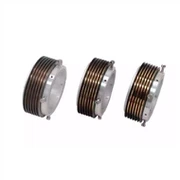
Hydraulic slip ring is a device used to transfer fluid or hydraulic power from a stationary source to a rotating shaft or an object that needs to be in motion. It consists of a rotating assembly and a stationary assembly. The rotating assembly is connected to the hydraulic circuit, while the stationary assembly is fixed to the hydraulic supply. The hydraulic slip ring allows for the transfer of hydraulic fluids or power from the stationary assembly to the rotating assembly, without the use of hoses or connectors that could hinder motion and cause leakage. Hydraulic slip rings are commonly used in various applications, including wind turbines, cranes, military equipment, and heavy machinery.
Advantages of Hydraulic Slip Ring
High performance
Hydraulic slip rings are designed to handle high speed and high temperature applications. They can transmit large amounts of power and data without interference or signal degradation.
Long service life
Hydraulic slip rings are designed to withstand harsh environments and heavy-duty usage. They have minimal wear and tear and can operate for a long time without requiring frequent maintenance or replacements.
Versatility
Hydraulic slip rings can be customized to meet the specific needs of different applications. They can be designed to handle different types of fluids, pressures, and temperatures, making them ideal for a wide range of industries and settings.
Cost-effective
Hydraulic slip rings are cost-effective because they reduce the need for expensive cables, connectors, and other components. They also minimize downtime and maintenance costs, as they require minimal maintenance and replacements.


Why Choose Us
Our Products
Focusing on the development, production and sales of industrial conductive slip rings, sensors.We are struggling to serve our clients with high quality and innovative products.
Global Shipping
Our products are not only sold as the best seller and high-reputation products in the domestic market, but also are exported to the world, such as America, UK, Germany, Russia, South-Korea, and Vietnam with OEM and ODM service, andwhich has won the extremely high praise and trust from the old and potential clients.
Custom Service
We anticipate intensive cooperation with your company and offer professional products, active and efficient support, and worry-free after-sales service.
Our Team
We are struggling to serve our clients with high quality and innovative products. Oursenior engineers, with more than 20 years experience on the industry technology, devote themselves to the strict QC and the thoughtful services.
Types of Hydraulic Slip Ring
Single passage hydraulic slip rings
Single passage hydraulic slip rings are devices used in hydraulics systems to transmit hydraulic fluid from a rotating component to a stationary component. They consist of a stationary hydraulic coupling and a rotating hydraulic coupling, similar to a slip ring used in electrical systems.The stationary hydraulic coupling is connected to the fluid supply and the rotating hydraulic coupling is connected to the hydraulic components that require fluid transfer. As the rotating component moves, the hydraulic slip ring allows for the transfer of fluid through the stationary and rotating couplings without any leakage or loss of pressure.
Multiple passage hydraulic slip rings
Multiple passage hydraulic slip rings are electro-mechanical devices used for transmitting fluid media, such as hydraulic oil or gas, while rotating. These slip rings consist of a stationary part called the stator and a rotating part called the rotor. The stator and rotor are made up of multiple components such as seals, bearings, and channels for fluid transmission. The stator is typically mounted on the stationary part of the equipment, while the rotor is mounted on the rotating part. The stator and rotor are separated by a small gap, which allows for rotation without any physical contact between the two. The fluid media is transferred through the slip ring by a series of channels that connect the stator and the rotor.
Pancake hydraulic slip rings
Pancake hydraulic slip rings are fluid power conductive devices designed to transfer hydraulic fluids or liquids from stationary to rotary systems in rotating applications. These devices are commonly used in hydraulic systems that require continuous rotation between different parts, such as hydraulic equipment, cranes, and other machinery.The pancake hydraulic slip ring consists of two major components, the stationary and the rotating parts. The stationary part is known as the stator, which is connected to the hydraulic system. The rotating part is known as the rotor, which is attached to the rotating shaft.
High-pressure hydraulic slip rings
High-pressure hydraulic slip rings are specialized slip rings designed for hydraulic systems, such as those used in drilling and mining equipment. They are used to transmit hydraulic fluid and signals between stationary and rotating components.The slip ring assembly consists of a rotating metal ring and a stationary brush or contact. The hydraulic fluid flows through channels within the rotating ring, and the stationary contact mechanically transfers the fluid to the stationary part of the system. The slip rings are designed to withstand high pressure and flow rates, ensuring reliable operation in demanding environments.
Hydraulic slip ring application fields
Hydraulic slip rings are often used in construction vehicles and heavy equipment, such as cranes, excavators, and bulldozers. These machines rely on hydraulic power to move heavy materials and perform various operations, and the slip rings allow power and data transfer to take place between the stationary and rotating components.
Wind turbines must be able to rotate freely to generate power, and hydraulic slip rings are often used to facilitate the transfer of power and control signals from the stationary base to the rotating blades and nacelle assembly.
Hydraulic slip rings are commonly used in marine and offshore applications, such as offshore drilling, ship-to-ship transfer, and underwater robotics. These environments require robust and reliable slip rings that can withstand harsh sea conditions and provide uninterrupted power and data transfer.
Hydraulic slip rings can also be found in aerospace and defense applications, where they are used to power and control aircraft and military vehicles. The slip rings must be able to withstand high speeds, extreme temperatures, and electromagnetic interference while providing reliable data and power transfer.
How Hydraulic Slip Rings Work
Hydraulic slip rings are intricate components commonly used in hydraulic systems, enabling the transfer of power and signals between rotating and stationary components. They are designed to manage high-pressure hydraulic fluid and ensure continuous operations in demanding applications where traditional slip rings may not work efficiently.The hydraulic slip ring consists of a rotating and stationary part that transfer hydraulic fluid, similar to how traditional electrical slip rings transfer electrical power and signals. At the core of the hydraulic slip ring is a specialized hydraulic rotary union and reciprocating union, which are used to transfer hydraulic fluid between the rotating and stationary parts.
The rotary union is responsible for sealing high-pressure hydraulic fluid while allowing rotation between the stationary and rotating parts. The reciprocating union transfers hydraulic pressure from the hydraulic supply to the rotary union and distributes it to the hydraulic circuit of the rotating machine. The pressure fluid transferred via these unions can be used to power hydraulic machinery, actuate hydraulic cylinders, and transmit signals to electronic devices.The hydraulic slip ring is installed in a hydraulic circuit and can be customized to fit specific application requirements. When installed, the hydraulic circuit will pass through the center of the slip ring. The circuit can then be connected to the rotating and stationary parts by hoses and fittings. The hydraulic supply line, which typically runs through the center of the rotating part, transfers hydraulic fluid to the rotating circuits.
How to Choose Hydraulic Slip Ring
Operating speed
The operating speed of the hydraulic slip ring is an important factor to consider because it will determine the amount of fluid that can flow through it. The speed is measured in RPM (revolutions per minute), and you need to select a hydraulic slip ring that can handle the speed of your application.
Fluid type and temperature
The type of fluid circulating through the hydraulic slip ring is also critical. Different types of fluids have different properties such as viscosity, corrosiveness, and lubricating properties. You need to ensure that the hydraulic slip ring is compatible with the fluid type and that it can operate within the required temperature range.
Pressure rating
Another important factor to consider is the pressure rating of the hydraulic slip ring. The pressure rating indicates the maximum pressure that the slip ring can handle without causing damage. It is crucial to ensure that the hydraulic slip ring can withstand the pressure of your application to prevent any fluid leakage or equipment failure.
Seal type
The seal type of the hydraulic slip ring determines the level of protection against fluid leakage. There are two main types of seals: lip seals and mechanical seals. Lip seals are suitable for low-pressure applications, while mechanical seals are better for high-pressure applications.
Mounting and size
The mounting and size of the hydraulic slip ring are also important factors to consider. It is crucial to ensure that the slip ring fits properly within your equipment and that it is mounted securely to prevent any damage or leakage.
Durability
The durability of the hydraulic slip ring is also critical, especially if it will be exposed to harsh environmental conditions. You need to choose a slip ring that is made of durable materials that can withstand corrosion, wear and tear, and extreme temperatures.
Precautions When Using Hydraulic Slip Ring


Follow the manufacturer's instructions: Always adhere to the manufacturer's instructions when installing and operating hydraulic slip rings. This includes the recommended torque values, fluid pressure, and maintenance procedures.
Regular maintenance: Hydraulic slip rings must be regularly maintained to ensure their longevity and optimal performance. Regular maintenance includes cleaning, lubrication, and inspection of critical components.
Proper installation
Install the hydraulic slip ring correctly to avoid misalignment, which can cause premature wear and damage to components.
Check for leaks
Check for leaks before operating the machine to avoid potential hazards and damage to the equipment.
Pressure and temperature control
Monitor the pressure and temperature of the hydraulic fluid to ensure it does not exceed the recommended values. Excessive pressure or temperature can lead to system failure or even cause a fire.
Safety guards and equipment
Install appropriate safety guards and equipment to prevent accidental contact with moving parts and to limit the risk of injury.

Hydraulic slip ring and a standard slip ring are both used to transmit signals, data, and power across a rotating interface. However, the main difference between the two lies in their application and mechanism of operation.Hydraulic slip ring is specifically designed to transmit hydraulic fluid between the stationary and rotating components of a hydraulic system. Unlike a standard slip ring, which uses brushes and rings to make electrical connections, a hydraulic slip ring has a rotating shaft that allows the hydraulic fluid to pass through to the rotating component without any leaks or loss of pressure. It is commonly used in industrial applications such as cranes, wind turbines, and offshore drilling rigs.
On the other hand, a standard slip ring, also known as an electrical slip ring, is primarily used to transmit electrical signals and power across a rotating joint. It uses brushes and rings to make contact and maintain electrical continuity between the stationary and rotating components. It is commonly used in a wide range of applications including wind turbines, medical equipment, robotics, and military equipment.
Hydraulic slip rings are designed to transfer fluid or gas from a stationary interface to a rotating component in a variety of applications, including manufacturing equipment, wind turbines, and marine systems. These slip rings can be used in harsh environments, such as high temperatures, corrosive atmospheres, and areas with high vibration or shock.
Hydraulic slip rings have a rugged construction with high-quality materials that can withstand harsh conditions. They are made of corrosion-resistant metals like stainless steel and are often coated with protective materials to prevent damage from corrosive agents.
In harsh environments, hydraulic slip rings operate under high pressure and temperature. Thus, they are equipped with high-performance seals and specialized bearings to handle the high pressure and temperature effectively. These slip rings come with advanced control options to ensure consistent, reliable performance under any environmental conditions. The control system allows operators to adjust the flow rate and pressure of the hydraulic or pneumatic systems, ensuring optimal performance and safety.
Hydraulic slip rings are an ideal solution for harsh environment applications. They can withstand extreme conditions and operate flawlessly, ensuring consistent performance and low maintenance.


How to Maintain Hydraulic Slip Ring
Regular inspection
The first step in maintaining hydraulic slip rings is to conduct regular inspections. Inspect the slip rings for any signs of wear and tear, such as cracks or corrosion. Check the fluid levels and ensure that the seals are in good condition. Inspect the electrical connections and clean them if necessary.
Cleaning
Hydraulic slip rings can accumulate dirt and debris over time, which can affect their performance. Use a soft brush or a compressed air blower to clean the slip rings thoroughly. Avoid using solvents or harsh chemicals, as these can damage the seals and the slip ring brush.
Lubrication
Lubrication is critical to the proper functioning of hydraulic slip rings. Apply a light coating of hydraulic fluid or grease to the slip ring brush and the seals. This will help to reduce friction and wear, and keep the slip rings operating smoothly.
Sealing
It is essential to ensure that the seals are in good condition. Replace any worn or damaged seals immediately to prevent fluid leaks and contamination. Use high-quality seals that are designed for use with hydraulic slip rings.
Fluid change
Over time, hydraulic fluid can become contaminated with dirt and debris. Regular fluid changes are essential in maintaining the proper operation of hydraulic slip rings.
FAQ
Hot Tags: hydraulic slip ring, China hydraulic slip ring manufacturers, suppliers, factory, ball bearing slip ring, Central Rotary Joint, 3 wire slip ring, carbon slip ring, air slip ring, Pneumatic Slip Ring




Send Inquiry
