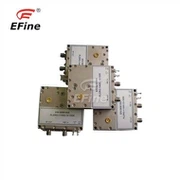
What is RF Low Pass Filter?
Jul 25, 2023
Title: RF Low Pass Filter: Design, Applications, and Advancements
Abstract:
This paper aims to provide a comprehensive overview of RF low pass filters, focusing on their design principles, applications, and recent advancements. RF low pass filters are crucial components in RF and microwave systems for selectively passing low-frequency signals while attenuating higher frequency signals. The objective of this study is to explore the key features, working principles, applications, and technological developments associated with RF low pass filters.
1. Introduction
RF low pass filters play a vital role in a wide range of industries, including telecommunications, wireless communication, audio systems, and radar systems. This paper aims to discuss the design principles, functionality, and applications of RF low pass filters while highlighting recent advancements that have improved their performance and efficiency.
2. Design and Working Principles
This section provides an in-depth analysis of the design and working principles of RF low pass filters. It covers fundamental components such as capacitors, inductors, and transmission lines. The working principles, including cutoff frequency, insertion loss, and return loss, are explored to gain insight into the overall functionality of RF low pass filters.
3. Types and Configurations
RF low pass filters are available in various types and configurations to meet specific application requirements. This section discusses common types, including RC filters, LC filters, and waveguide filters, as well as their configurations, such as Butterworth, Chebyshev, and elliptic designs. The advantages and limitations of each type are thoroughly examined to provide a comprehensive understanding of the available options.
4. Design Considerations and Optimization Techniques
Designing RF low pass filters requires careful consideration of factors such as cutoff frequency, passband ripple, and stopband attenuation. This section explores the design considerations and optimization techniques employed to achieve the desired performance parameters. Topics such as component selection, filter order, and impedance matching are discussed to ensure efficient signal filtering and minimize unwanted signal distortions.
5. Materials and Manufacturing Techniques
The choice of materials and manufacturing techniques significantly impacts the performance and reliability of RF low pass filters. This section examines the commonly used materials, such as ceramic, dielectric substrates, and printed circuit boards, for achieving low loss and high-frequency operation. Additionally, it discusses manufacturing techniques like microstrip, stripline, and thin-film fabrication, which are employed to produce high-quality RF low pass filters.
6. Applications
RF low pass filters find applications in a wide range of industries and systems that require selective filtering of low-frequency signals. This section focuses on their usage in audio systems, baseband signal processing, data communication, and power amplification. The paper highlights the specific requirements and challenges faced in each application area, emphasizing the versatility and reliability of RF low pass filters.
7. Advancements and Innovations
Ongoing research and development efforts have led to significant advancements in RF low pass filter technology. This section explores recent innovations, such as miniaturized designs, wideband operation, improved stopband rejection, and integration with other RF components. These advancements address key performance factors like size, bandwidth, and insertion loss, thereby improving the overall functionality of RF low pass filters.
8. Performance Evaluation and Maintenance
The performance evaluation of RF low pass filters involves assessing crucial parameters such as insertion loss, return loss, group delay, and stopband rejection. Furthermore, this section discusses the importance of regular maintenance practices, including calibration, testing, and inspection, for ensuring optimal performance and extending the lifespan of RF low pass filters.
9. Challenges and Future Outlook
Despite their significant advantages, RF low pass filters face challenges related to passband ripple, stopband attenuation, and size limitations. This section highlights these challenges and presents potential solutions based on ongoing research and technological advancements. The paper concludes with an outlook on future trends, including advanced materials, miniaturization, and improved manufacturing techniques, aiming to overcome these challenges and further enhance the capabilities of RF low pass filters.
10. Conclusion
In conclusion, RF low pass filters are essential components in RF and microwave systems for selective low-frequency signal filtering. Their design principles, working mechanisms, applications, and recent advancements have been thoroughly examined in this paper. By understanding the key features and considerations associated with RF low pass filters, engineers and researchers can make informed decisions and contribute to the continuous improvement of these vital components.
Keywords: RF low pass filter, signal filtering, design principles, materials, applications, advancements.