The brief introduction of double ridged horn antenna?
Jul 12, 2023
Introduction:
The double ridged horn antenna is a prominent component in the field of microwave engineering. Its unique design and characteristics make it highly suitable for a wide range of applications that require broad bandwidth and high gain performance. This article explores the advancements, design considerations, and various applications of the double ridged horn antenna.
1. Design and Structure:
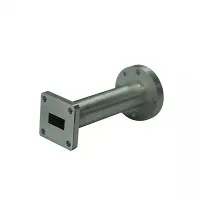
The double ridged horn antenna features a metallic waveguide structure with two ridges running along its length, forming a double-ridged profile. This design enhances the antenna's performance by increasing its bandwidth and radiation efficiency. The shape of the horn resembles a rectangular pyramid, with an open end for radiation and a flared mouth at the other end for impedance matching.
2. Advancements in Double Ridged Horn Antennas:
In recent years, several advancements have been made in the design and fabrication of double ridged horn antennas. These include:
2.1 Improved Bandwidth:
Researchers have focused on enhancing the antenna's bandwidth to cover a broader range of frequencies. Techniques such as ridge height optimization and profile modification have been utilized to achieve wideband characteristics.
2.2 Compact Size:
Efforts have been made to miniaturize the double ridged horn antenna without compromising its performance. Novel designs, such as metamaterial-based structures, have been employed to reduce the antenna's overall size while maintaining its broadband capabilities.
2.3 Polarization Flexibility:
Advancements in the design of double ridged horn antennas have facilitated polarization reconfigurability. Dual-polarized, multi-polarized, and circularly polarized antennas are being developed to cater to specific application requirements.
2.4 High-Gain Performance:
Research has focused on optimizing the gain of double ridged horn antennas. Advanced techniques, including aperture tapering, corrugations, and horn profile modifications, have been employed to achieve higher gain values.
2.5 Frequency Reconfigurability:
Novel designs employing switches, varactors, or microelectromechanical systems (MEMS) allow for frequency reconfigurability in the double ridged horn antenna. This enables seamless operation across multiple frequency bands.
3. Design Considerations:
Designers must consider various factors to optimize the performance of double ridged horn antennas:
3.1 Bandwidth:
The dimensions and profile of the ridges significantly influence the antenna's bandwidth. Careful design and optimization techniques ensure maximum bandwidth coverage.
3.2 Gain and Directivity:
The shape and size of the antenna, along with the ridge profile, determine the gain and directivity characteristics. Proper design helps achieve high gain and improved directivity.
3.3 Radiation Pattern:
The horn's shape defines the radiation pattern. Desired radiation characteristics, such as beamwidth and sidelobe levels, need to be considered during the design process.
3.4 Impedance Matching:
The flared mouth of the horn is designed for impedance matching to minimize reflections and maximize power transfer. Impedance matching ensures efficient energy transmission between the antenna and the feeding system.
3.5 Material Selection:
The choice of materials affects various antenna parameters, including bandwidth, gain, and efficiency. Selecting appropriate materials with low loss and suitable dielectric properties is crucial for optimal performance.
4. Applications of Double Ridged Horn Antennas:
The double ridged horn antenna finds widespread applications in several fields:
4.1 Microwave Communications:
These antennas are utilized in microwave communication systems, including satellite communications, point-to-point links, and wireless networks. Their broad bandwidth and high gain make them ideal for delivering high-speed data transmission capabilities.
4.2 Radar Systems:
Double ridged horn antennas are employed in radar systems for their wideband characteristics, high gain, and excellent directivity. They provide precise target detection, tracking, and imaging capabilities in military and aerospace applications.
4.3 Radio Astronomy:
These antennas play a vital role in radio astronomy research, offering wideband performance for capturing and studying celestial signals across various frequency bands.
4.4 EMC Testing:
Double ridged horn antennas are used in electromagnetic compatibility (EMC) testing to radiate electromagnetic energy and evaluate electronic devices' immunity or emissions in controlled environments.
4.5 Medical Imaging:
In medical applications such as magnetic resonance imaging (MRI), double ridged horn antennas are used to generate high-frequency electromagnetic fields for diagnostic purposes.
4.6 Wireless Power Transfer:
The wide bandwidth and efficient power transfer capabilities of double ridged horn antennas make them suitable for wireless power transfer applications, including wireless charging systems.
Conclusion:
The double ridged horn antenna is a versatile and powerful component in microwave engineering. Its unique design, broad bandwidth, and high-gain characteristics make it valuable for various applications, ranging from communication systems to radar and scientific research. With continued advancements in design techniques and material science, double ridged horn antennas will continue to play a significant role in shaping the future of wireless technology and electromagnetic applications.