

Why high- frequency slip rings are reliable?
Jul 12, 2023
1. Overview of High-Frequency Slip Rings


High-frequency slip rings, also known as rotary electrical interfaces or electrical swivels, provide a means for the transfer of electrical signals and power between rotating machinery and stationary systems. These slip rings consist of a rotating assembly (rotor) and a stationary assembly (stator), connected via brushes and contact surfaces. The slip rings ensure electrical continuity while accommodating rotational movements.
2.Specification of High-Frequency Slip Rings
| Electrical Part | |
| Circuits @ Current | 24 circuits @ 2A |
| Rated Voltage | 240VAC/DC |
| Insulation Resistance | ≥1000MΩ @ 500VDC |
| Dielectric Strength | 600V @ 50Hz |
| Electrical Noise | 700mΩ @ 6VDC, 50mA |
| Work Speed | 300RPM Max |
| Work Temperature | -40ºC~+80ºC |
| Work Humidity | 60%RH or higher |
| Contact Materials | Gold to gold |
| Housing Materials | Alluminum Alloy |
| IP Degree | IP54 or higher |
| Coaxial Part | |
| Channel | 1 Channel |
| Frequency Range | 0-2.3GHz |
| Specific Impedance | 70Ω |
| Work Temperature | -40ºC~+80ºC |
| Insertion Loss | 0.65dB @ 1GHz |
| Return Loss | -18dB/1GHz Max |
| VSWR | ≤1.3dB Max |
| VSWR-WOW | ±0.05 Max |
| Work Speed | 100RPM Max |
| Work Humidty | 60%RH or higher |
| Lead Wire Size | RG179U |
| Lead Wire Length | 250mm |
| Connector | BNC/SMA |
3. Advancements of High-Frequency Slip Rings

Advancements in technology and manufacturing techniques have led to significant improvements in high-frequency slip rings. These advancements include:
- Enhanced Signal Integrity:
High-frequency slip rings are designed to minimize signal loss, crosstalk, and electromagnetic interference (EMI). Improved materials, such as low-loss dielectrics and shielding techniques, help maintain signal integrity even at high frequencies.
- High Data Rate Transmission:
Modern slip rings can handle higher data rates, allowing for the transmission of digital signals, high-definition video, and complex control signals. This is achieved through optimized brush designs, improved contact materials, and precise alignment.
- Wide Frequency Range:
High-frequency slip rings now support a wide frequency range, from a few kHz to several GHz. This flexibility enables their use in various applications, such as radar systems, communication systems, and high-speed data transfer.
- Increased Power Handling Capability:
Advancements in slip ring technology allow for higher power transmission while maintaining efficient electrical connections. This is achieved through innovative contact materials, heat dissipation techniques, and effective current-carrying capacities.
- Miniaturization:
Smaller, lightweight high-frequency slip rings have been developed to meet the demands of modern applications with limited space or weight restrictions. Miniaturization is achieved through compact designs, precise machining, and improved brush materials.
- Longevity and Reliability:
High-quality materials, advanced lubrication techniques, and robust designs improve the lifespan and reliability of modern slip rings. These advancements reduce maintenance requirements and increase overall system reliability.
4. Design Considerations of High-Frequency Slip Rings

Designers must consider several factors when designing high-frequency slip rings.
- Frequency Range:
The slip ring design should accommodate the desired frequency range while minimizing signal loss and distortion. Proper selection of contact materials, brush design, and surface finishes is critical for achieving high-frequency performance.
- Signal Integrity:
Measures should be taken to minimize signal loss, crosstalk, and EMI. This includes using shielding techniques, low-loss dielectric materials, and proper grounding.
- Power Handling:
The slip ring's design should allow for efficient power transmission without excessive resistive losses or overheating. Contact materials, brush design, and cooling mechanisms play a crucial role in ensuring reliable power handling capabilities.
- Mechanical Considerations:
Slip rings must be designed to accommodate rotational speed, torque, and environmental conditions. Factors such as bearing selection, sealing, and shock/vibration resistance are essential for long-term performance and reliability.
- Maintenance and Serviceability:
Designing slip rings that allow for easy maintenance, repair, and replacement of components ensures minimal downtime and cost-effective operation. Considerations such as brush access, modular designs, and replaceable parts should be taken into account.
5. Applications of High-Frequency Slip Rings

Aerospace and Defense:
Slip rings are used in radar systems, satellite communications, airborne surveillance systems, and flight control systems. They facilitate the transmission of high-frequency signals, power, and data between rotating and stationary parts in aircraft and spacecraft.
Medical Equipment:
High-frequency slip rings are used in medical imaging devices such as CT scanners, MRI machines, and X-ray equipment. They enable the transmission of high-frequency signals used for imaging and diagnostics.

6.Certificate
Our Certificate

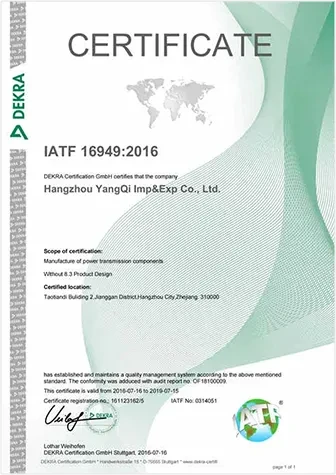
IATF 16949:2016
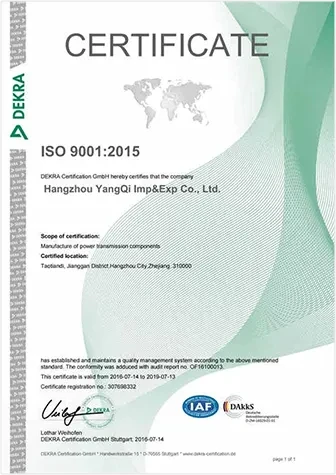
ISO 9001:2015
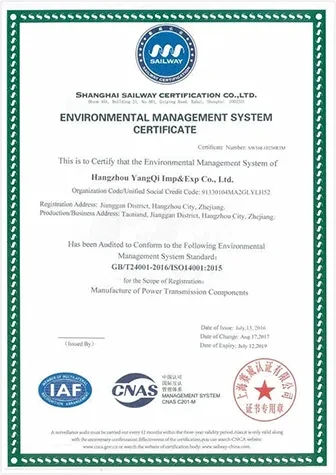
Environmental Management System Certificate
7.Company Profile

Tel:86 18089298725
Address:RM31810, Unit 3, Building 6, HuaCheng International, No.82, ChangAn South Road, Xi'an City, Shaanxi Province, P.R. China
Email:sunny_ma@winfinecom.com


