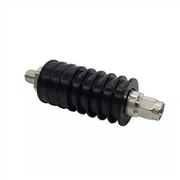
Why choose us Integrated Attenuator?
Aug 02, 2023
Abstract:
This paper presents a comprehensive analysis of integrated attenuators, including their design principles, applications, and recent advancements. Integrated attenuators play a critical role in various industries, such as telecommunications, aerospace, and electronics. The paper discusses the fundamental design considerations, the significance of integrated attenuators in different applications, and the emerging trends and future prospects in this field. Additionally, it explores advancements in materials, circuit design, and integration techniques that have contributed to improved performance and expanded applications for integrated attenuators.
Keywords: integrated attenuator, design, applications, advancements, future prospects

1. Introduction
Integrated attenuators are essential components in modern electronic systems, providing precise control over signal power levels. This paper aims to provide a comprehensive overview of the design principles, applications, and advancements in integrated attenuator technology.
2. Design Principles
Integrated attenuators are designed to attenuate or reduce the power level of an input signal while maintaining its integrity. The primary design considerations include attenuation range, linearity, insertion loss, return loss, power handling capability, and frequency response. Various design techniques, such as resistive, capacitive, and switched attenuators, are employed to achieve desired attenuation characteristics.
3. Significance and Applications
3.1 Telecommunications: Integrated attenuators are extensively used in telecommunications systems for signal conditioning, power control, and network optimization. They help balance signal levels, prevent signal distortion, and protect sensitive components from excessive power.
3.2 Aerospace: In aerospace applications, integrated attenuators are employed in radar systems, satellite communications, and navigation equipment. They ensure accurate signal transmission, mitigate interference, and maintain system performance in challenging environments.
3.3 Electronics: Integrated attenuators find applications in various electronic devices, such as wireless communication systems, audio/video equipment, and test and measurement instruments. They enable signal calibration, reduce signal-to-noise ratio, and provide accurate power control.
3.4 Research and Development: Integrated attenuators are crucial tools in research and development laboratories for characterizing devices, testing prototypes, and conducting experiments. They facilitate precise signal control, allowing researchers to study device behavior under different operating conditions.
4. Recent Advancements
4.1 Wide Attenuation Range: Recent advancements in integrated attenuator design have expanded the available attenuation range, allowing for more precise control over signal levels. This has facilitated the implementation of advanced modulation schemes, high-speed data transmission, and multi-channel communication systems.
4.2 Improved Linearity: Ongoing research focuses on enhancing the linearity of integrated attenuators, reducing distortion and improving signal fidelity. This advancement is particularly important for applications requiring accurate amplitude control, such as wireless base stations and RF transmitters.
4.3 Integration with Semiconductor Technologies: Integrated attenuators have benefited from advancements in semiconductor technologies, such as CMOS and GaAs. These technologies have enabled the integration of attenuators with other circuit components, leading to smaller footprints, improved performance, and reduced costs.
4.4 Digital Attenuation Control: Digital control techniques, such as digital potentiometers and digitally controlled switches, have been integrated into attenuator designs, enabling precise and programmable attenuation control. This allows for automated calibration, remote control, and adaptability to dynamic signal environments.
5.Future Prospects
5.1 Broadband Attenuation: Future integrated attenuators are expected to cover an even broader frequency range, including microwave and millimeter-wave frequencies. This will enable their use in emerging applications such as 5G telecommunications, satellite communications, and high-speed data links.
5.2 Low-Noise Performance: Research efforts will focus on achieving low-noise performance in integrated attenuators, particularly in ultra-sensitive applications such as radio astronomy and medical imaging. This will involve optimizing circuit design, using low-noise materials, and reducing parasitic effects.
5.3 Integration with Advanced Packaging Technologies: Integrated attenuators will be integrated into advanced packaging technologies, such as system-on-chip (SoC) and system-in-package (SiP), enabling higher integration densities and improved performance. This will contribute to the development of compact and multifunctional electronic systems.
5.4 Adaptive Attenuation: Future integrated attenuators will incorporate adaptive control techniques, such as machine learning algorithms and artificial intelligence, to dynamically adjust attenuation levels based on changing signal conditions. This will enhance system efficiency, optimize power consumption, and enable adaptive communication systems.
6. Conclusion
Integrated attenuators are crucial components in various industries, providing precise control over signal power levels. Their applications span telecommunications, aerospace, electronics, and research and development. Recent advancements have expanded their frequency range, improved linearity, and integrated digital control techniques. Future prospects include broadband attenuation, low-noise performance, integration with advanced packaging technologies, and adaptive attenuation. Continued research and development will drive further advancements, leading to improved performance, increased functionality, and innovative applications for integrated attenuators in diverse industry sectors.