

What is Liquid Level Sensor?
Jun 27, 2023
1. Working Principles of Liquid Level Sensors


Liquid level sensors utilize different technologies to accurately measure the level of liquids. Let's explore some commonly used working principles:
A. Capacitive Level Sensors:
Capacitive level sensors detect liquid levels by measuring changes in capacitance. They consist of two conductive plates, with the liquid acting as the dielectric material between them. When the liquid is present, it changes the capacitance value, allowing the sensor to determine the level.
B. Ultrasonic Level Sensors:
Ultrasonic level sensors emit high-frequency sound waves that bounce off the liquid surface. The sensor calculates the distance based on the time it takes for the sound wave to return, providing an accurate measurement of the liquid level. Ultrasonic sensors are suitable for both non-contact and continuous level monitoring.
C. Float Switch Level Sensors:
Float switch level sensors use a float that moves up or down with the liquid level. This float triggers a switch that indicates the level. These sensors are commonly used in industrial applications due to their simplicity and reliability.
D. Conductive Level Sensors:
Conductive level sensors measure the conductivity of the liquid. As the liquid level changes, the conductivity also varies. The sensor detects these changes and determines the level accordingly. Conductive sensors are commonly used in applications involving conductive liquids.
2. Types of Liquid Level Sensors:
- Continuous Level Sensors: Continuous level sensors provide real-time measurements of liquid levels. They are suitable when precise level monitoring is required. Capacitive and ultrasonic level sensors fall into this category. Capacitive sensors are widely used for their high accuracy, while ultrasonic sensors offer non-contact level measurement.
- Point Level Sensors:Point level sensors indicate whether the liquid level has reached a specific point or threshold. These sensors are used to trigger alarms, control pumps, or activate valves. Float switch and conductive sensors are commonly used as point level sensors.
3. Applications of Liquid Level Sensors:
Liquid level sensors find extensive applications across various industries. Some key applications include:
A. Chemical Processing:
Liquid level sensors are used in chemical processing plants to monitor the levels of different chemicals and ensure accurate mixing ratios. They help prevent overflow, optimize production processes, and improve safety.
B. Food and Beverage:
In the food and beverage industry, liquid level sensors are used to monitor ingredient levels, such as water, milk, and syrups. They facilitate inventory management, prevent shortages, and maintain consistent production processes.
C. Oil and Gas:
Liquid level sensors play a crucial role in oil and gas refineries by monitoring liquid levels in storage tanks, ensuring efficient inventory management and preventing spills or leaks. They also monitor the levels of lubricants or coolants in machinery, optimizing performance and preventing equipment failures.
D. Water Treatment:
Liquid level sensors are integral to water treatment plants for monitoring water levels in reservoirs, tanks, and basins. They enable efficient water management, prevent overflows, and maintain water quality parameters.
4. Advancements in Liquid Level Sensors:
Advancements in technology have significantly improved the capabilities and performance of liquid level sensors. Some notable advancements include:
Wireless Connectivity:
Modern liquid level sensors can be equipped with wireless connectivity options, enabling real-time data transmission to centralized monitoring systems. This improves accessibility, allows remote monitoring, and facilitates proactive maintenance.


Internet of Things (IoT) Integration:
Integration with IoT platforms enables liquid level sensors to interact with other systems or devices, providing advanced analytics, predictive maintenance, and automated control. This enhances the efficiency of industrial processes and reduces human intervention.
Miniaturization:
Advancements in microelectronics have led to the miniaturization of liquid level sensors, making them suitable for applications with space constraints. These compact sensors can be easily installed in tight spaces or integrated into equipment without sacrificing accuracy or reliability.
Advanced Materials:
The use of advanced materials, such as corrosion-resistant coatings or non-stick surfaces, extends the lifespan of liquid level sensors, even in harsh chemical environments. This ensures long-term reliability and reduces maintenance requirements.

5.certificate
Our Certificate

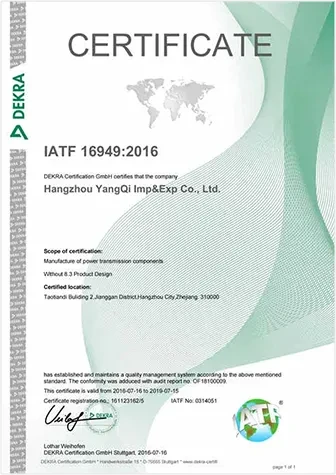
IATF 16949:2016
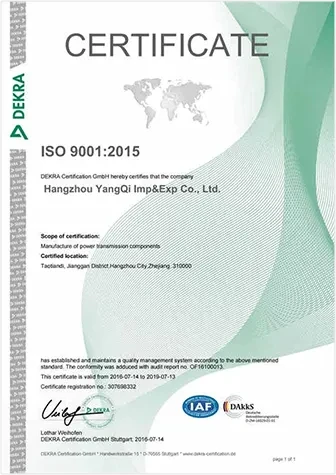
ISO 9001:2015
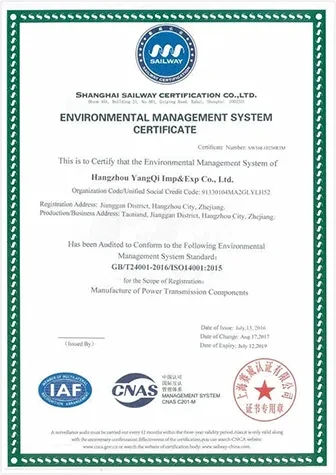
Environmental Management System Certificate
Guarantee
WARRANTY PERIOD:
The warranty period of the product is twelve (12) months.
SCOPE OF WARRANTY:
The company guarantees that the product is free of any material and manufacturing defects during the warranty period. If the product fails under normal use during the warranty period, it is natural damage (non-human factor damage), the company's product or the company's agent product enjoys free replacement of new products or good products, a component repair or replacement during the warranty period Repair service.
Free maintenance of the product warranty period. The warranty period of parts and accessories that have been replaced by our company will not be extended due to free maintenance. During the warranty period, if the fault cannot be repaired due to the shortage of product parts, or the product is discontinued or out of stock, the company can replace the models with the same specification or higher level after the customer agrees to replace, and the price difference will be charged at the discretion of the customer.
7.Company Profile:

Tel:86 18089298725
Address:RM31810, Unit 3, Building 6, HuaCheng International, No.82, ChangAn South Road, Xi'an City, Shaanxi Province, P.R. China
Email:sunny_ma@winfinecom.com
Conclusion:
Liquid level sensors have revolutionized level monitoring in various industries, enabling accurate and efficient management of liquids. With their diverse working principles, types, and applications, these sensors play a vital role in ensuring smooth operations, preventing equipment failures, and optimizing processes. Advancements in technology continue to enhance the capabilities of liquid level sensors, making them smarter, more reliable, and easier to integrate into industrial systems. As industrial processes become increasingly automated and interconnected, liquid level sensors will continue to be indispensable components for efficient and reliable level monitoring.


