

What are the advantages which Waveguide Fixed Attenuator products?
Aug 24, 2023
Abstract:
Waveguide fixed attenuators are essential components in microwave and millimeter-wave systems, providing precise and controlled attenuation of electromagnetic signals. This paper focuses on waveguide fixed attenuators, exploring their advancements, operating principles, design considerations, and applications across different industries. The objective is to understand the significance of waveguide fixed attenuators in enabling accurate signal attenuation and ensuring reliable performance in various high-frequency applications.


1. Introduction
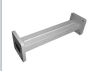
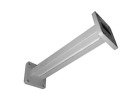
Waveguide fixed attenuators play a crucial role in microwave and millimeter-wave systems, providing controlled signal attenuation to achieve desired power levels. This paper provides an overview of waveguide fixed attenuators, highlighting their advancements, applications, and impact in ensuring accurate signal attenuation in different industries.
2. Principles of Operation
Waveguide fixed attenuators operate based on the principle of reducing the power level of an electromagnetic signal passing through the waveguide. They consist of a waveguide section with an attenuating element, such as a resistive material or a series of metal plates. The electromagnetic energy passing through the waveguide is absorbed or reflected by the attenuating element, thus reducing the signal's power.
3. Design Considerations
Effective design of waveguide fixed attenuators involves careful consideration of factors such as attenuation level, frequency range, return loss, insertion loss, VSWR (Voltage Standing Wave Ratio), power handling capacity, and temperature stability. The selection of appropriate attenuating materials and geometries is critical in achieving the desired attenuation characteristics. Additionally, considerations must be given to the waveguide dimensions, flange types, and connector compatibility to ensure seamless integration into the system.
4. Advancements in Waveguide Fixed Attenuators
Advancements in materials, fabrication techniques, and design optimization have significantly improved the performance and capabilities of waveguide fixed attenuators. The use of precision machining and thin film deposition processes enables the production of attenuators with precise attenuation levels and low insertion loss. Advanced resistive materials with high power handling capabilities and temperature stability enhance the performance of waveguide fixed attenuators in demanding applications.
5. Applications
Waveguide fixed attenuators find applications in various industries, including telecommunications, radar systems, satellite communication, and research laboratories. They are used to calibrate signal levels, reduce power in amplification stages, establish reference power levels, and ensure proper impedance matching. Waveguide fixed attenuators provide accurate and repeatable attenuation, facilitating reliable signal analysis, testing, and system performance optimization.
6. Benefits and Future Prospects
The utilization of waveguide fixed attenuators offers several benefits, including precise and controlled attenuation, high power handling capacity, low VSWR, and excellent return loss characteristics. They provide reliable and repeatable signal attenuation, ensuring accurate measurements and reducing the risk of signal distortion. Future prospects involve the development of attenuators with broader frequency ranges, higher power handling capabilities, and advancements in miniaturization to meet the demands of emerging high-frequency applications.
7. Conclusion
Waveguide fixed attenuators play a vital role in microwave and millimeter-wave systems by providing precise and controlled signal attenuation. This paper has provided an overview of their operating principles, design considerations, advancements, and applications. By understanding the significance of waveguide fixed attenuators, engineers and researchers can continue to innovate and develop solutions that ensure accurate signal attenuation and reliable performance in various industries and high-frequency applications.


